Water Extraction in Pflugerville, TX
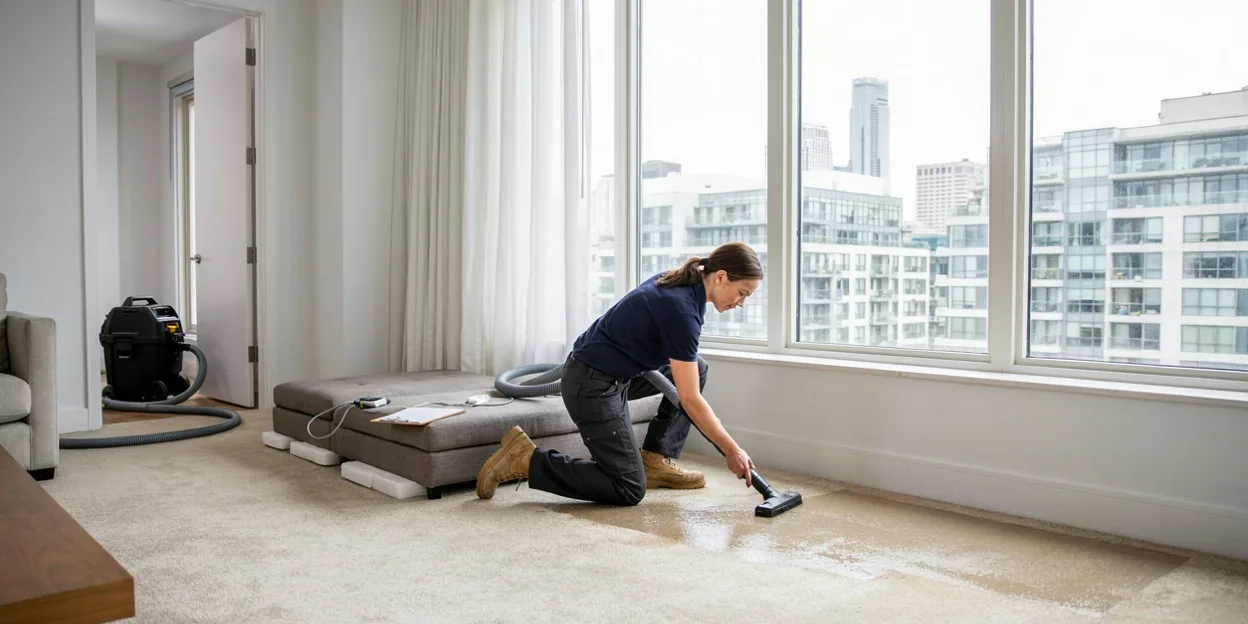
The washing machine hose let go during the spin cycle while you were at Stone Hill picking up groceries. By the time you got back, the utility room, the hall, and half the kitchen were under a quarter inch of water, and on a slab it had nowhere to go but sideways. The carpet in the front bedroom is already dark along the doorway. This site routes your call to an independent local provider who does water extraction in Pflugerville and across northeast Travis County.
Getting a quarter inch of water off a slab floor
The crew's first question is whether the water has stopped. If not, they find the valve with you, usually on the garage wall or in the meter box at the sidewalk. Then the extraction gear comes in. A truck-mounted or portable unit pulls water out of carpet and pad, out of the grout lines, and out from under the edges of the laminate, which is where a shop vac and a stack of towels leave most of it.
With the standing water gone, the metering starts. Water on a slab travels under the flooring and shows up in a room that never looked wet, so every floor gets read, along with the bottom foot of each wall. Those readings decide where the structural drying equipment sits and what has to leave.
The hour before the extraction truck reaches your street
Close the valve if you can do it without walking through water that has reached an outlet. Turn off the breaker for the wet rooms. Lift shoes, boxes, and rugs off the floor and set furniture legs on foil or plastic lids. Photograph each room before you move anything else, and open cabinet doors so air can reach the base. Then call and say which rooms are wet.
Floors that come back and floors that do not
A Pflugerville house built since the 1990s usually has tile in the kitchen and baths, laminate or engineered wood through the living areas, and carpet in the bedrooms. Tile cleans up once the water is gone, though the grout and the drywall behind the baseboard still need drying. Carpet often survives if extraction starts the same day. The pad under it almost never does.
Laminate is the usual loss. The fiberboard core swells as soon as water reaches a seam, and it does not shrink back. Engineered wood can sometimes be saved when the crew reaches it the first day. The particleboard bases under kitchen and bath cabinets, and the drywall behind them, usually come out. For every item that leaves, ask which reading justified it.
Why a Pflugerville extraction takes longer to finish than to start
The house sits on Blackland clay under a slab, so the water spreads instead of dropping, and a leak under the floor can be feeding the wet spot the whole time. If the water came up through the slab rather than from an appliance, slab leak detection comes before drying, because there is no point drying a floor that is still being fed from below.
Summer humidity here sits high enough that open windows do little, which is why the drying equipment matters as much as the pump. If the water came in under the garage door from the street or from Gilleland Creek, say so, because creek flood cleanup follows different rules about what can stay.
A hose, a supply line, or a failed water heater is the kind of sudden loss most Texas policies respond to. Ask the crew to log readings and photos from the first visit so the record exists for your adjuster.
Call about the water across the kitchen floor
Know the address, about when the water started, which rooms are wet, and whether the valve is off. Mention any water still standing. Call (512) 855-6202 and tell us what you see.